
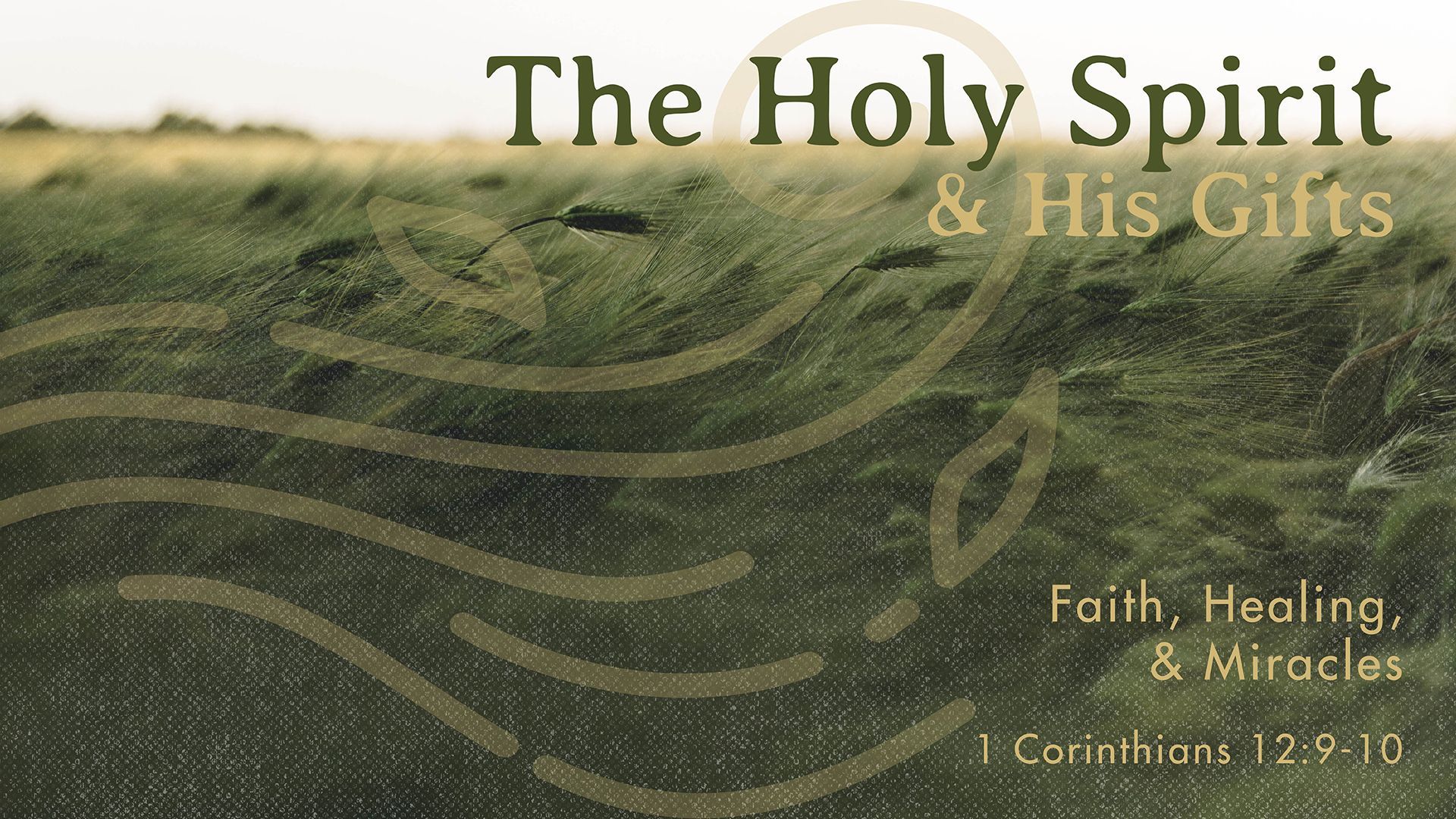

Mountain-Moving Faith: How God Still Works Through Ordinary People
What if the same power that healed the sick, multiplied food, and raised the dead is still available today -- not just to a select few, but to ordinary people willing to make themselves available to God? That is not a question designed to stir up hype or false hope. It is a question rooted in scripture, in the character of God, and in the reality of what the Holy Spirit is doing among his people right now.
The gifts of faith, healing, and miracles are not relics of a distant biblical era. They are active, living expressions of God's kingdom breaking into our present world. And understanding them might change the way you pray, the way you pay attention, and the way you show up for the people around you.
The Gift of Faith Is Not What You Think
When most people hear the word "faith," they think of belief -- the kind that gets you through hard times or the kind that saved you in the first place. But the Bible describes something more specific and more striking: a mountain-moving faith that is not produced by human effort but given by the Holy Spirit in a particular moment for a particular purpose.
The theologian James Dunn describes it as "a mysterious surge of confidence that arises within a person, within a particular situation, need, or challenge, and it gives them a deep spiritual certainty that God is about to act through a word or action." This is not positive thinking. It is not willpower dressed up in religious language. It is a sudden, God-given certainty that he is about to move.
In 1 Corinthians 13:2, Paul makes something clear: even this extraordinary kind of faith, the kind that moves mountains, is worth nothing without love. That is the starting point. Before asking whether this gift will work, the better question is whether we genuinely care about the person in front of us. Every miracle Jesus performed flowed through compassion. The gift of faith is no different.
This kind of faith is not about faith in our faith. It is about faith in God. We keep our eyes on the one doing the work, not on how much belief we can muster. And the purpose of this gift is not to make us look powerful -- it is to clear the way so that others can see the glory of God. As Isaiah 40:4-5 describes, God levels mountains and raises valleys so that his glory can be revealed. That is what this gift does. It removes the obstacles blocking people's view of a good and powerful God.
Healing Is Messier and More Beautiful Than We Expect
The gift of healing is listed right alongside faith in 1 Corinthians 12, and it is worth noting that the word "gifts" is plural. Perhaps that is because healing takes so many forms -- physical, emotional, relational, spiritual, inner healing. Or perhaps it is because every single act of healing is its own gift, unrepeatable and unearned.
Here is what healing is not: it is not a formula. It is not a technique. It is not the result of saying the right words or having the right amount of faith. The only consistent thing about how Jesus healed people in the Gospels is that it was beautifully inconsistent. He healed with a touch. He healed from a distance. He healed using mud made from his own spit. He healed with a word. The variety is intentional. God does not want us trusting a method. He wants us trusting him.
Francis McNutt offers a helpful framework: healing is often "more or less, not all or nothing." Some people experience complete healing immediately. Others experience partial healing over time. Others experience something less measurable -- a sense of peace, of being seen and loved by God -- that is its own kind of restoration. And sometimes, in this broken world, healing does not come the way we hoped. That tension is real and deserves honest engagement.
But here is what scripture makes plain: we are called to pray for healing because Jesus did. In John 14:12, Jesus himself says that those who believe in him will do the works he has been doing. That is not a promise reserved for a spiritual elite. It is an invitation extended to every follower of Jesus. Our responsibility is obedience -- to pray, to ask, to make ourselves available. God alone is responsible for the outcome.
Miracles Are Signs, Not Shows
Miracles in the Bible were never random displays of power. They were signs pointing beyond themselves to the identity of Jesus and the arrival of his kingdom. When he walked on water, multiplied loaves and fish, or raised Lazarus from the dead, he was offering the world a preview of what is coming -- a kingdom where sickness, death, and scarcity no longer have the final word.
One of the most commonly overlooked miracles is conversion itself. When a self-centered, sin-deadened heart turns toward God and begins to live a new life, that is extraordinary. Nature obeying God is remarkable. But a human heart surrendering to Jesus? That is a miracle of the highest order.
The call, then, is not to chase signs and wonders from conference to conference. It is to pursue deeper intimacy with Jesus, to surrender to the Holy Spirit, and to make ourselves available. When we do, God does what only he can do.
An Invitation for Ordinary People
A four-year-old boy named Joel once interrupted a prayer circle at a children's home in Mexico to ask what kind of food God delivers -- and then specifically whether God would bring meat, and then what kind of meat. That same day, a truckload of premium cuts arrived, more than enough to fill every child's plate. Joel did not have sophisticated theology. He simply believed that God sees, that God provides, and that it was worth asking specifically.
That kind of expectant, humble, love-motivated faith is available to all of us.
You do not need to be an expert. You do not need a title or a platform. You need to be available -- willing to pay attention, willing to take a small risk, willing to pray a simple prayer for someone who is hurting. God can use any one of us to clear the way for someone else to experience his kingdom.
So ask. Ask for faith. Ask God to heal. Ask him to do what only he can do. And then trust the one who is wholly responsible for the outcome.
Everyday Questions About Faith, Healing, and Miracles
What is the spiritual gift of faith, and how can I recognize it?
The spiritual gift of faith is a Holy Spirit-given confidence in God’s ability to act in a particular situation. It is something we receive rather than something we create by trying harder to believe. In practice, it should lead us toward loving others, trusting God, and drawing attention to him.
How can I pray for someone’s healing when I feel unsure?
You can begin by asking whether the person would welcome prayer, then simply ask Jesus to meet their need. You do not need special words or complete confidence to make yourself available to God. Your role is to pray with compassion and leave the outcome with him.
Does unanswered prayer mean I do not have enough faith?
When healing does not come as you hoped, it does not mean you failed or that God loves you any less. Healing is not a formula controlled by the strength of your belief. You can bring your disappointment to God, keep asking for his help, and let trusted people support you.
Does God still work miracles through ordinary people today?
Yes, the article points to the gifts of faith, healing, and miracles in 1 Corinthians 12 as ways the Holy Spirit continues to work through followers of Jesus. You do not need a ministry title or an extraordinary background to pray for someone or respond to God’s prompting. These gifts serve others and point people toward Jesus.
How can I become more open to the Holy Spirit in everyday life?
Start by asking the Holy Spirit to help you notice people who need care, encouragement, or prayer. Spend time with Jesus through Scripture and prayer, and respond to small opportunities to love someone. You can trust God with the results even when you feel uncertain.
Hit play to listen to the sermon this blog is based on
At Harvest Vineyard, we believe we are better together, in community. We're glad you're here.

ENCOUNTER CHRIST.
EXPERIENCE COMMUNITY.
LOVE THE WORLD.
We believe that experiencing the love and mercy of God is more effective in bringing change to people's lives than rules, guilt, and condemnation. We have attempted to make our community a place where people can come as they are and still experience love and mercy. At the same time, we desire to learn and apply the truth of God to our lives and learn how to speak truth to one another.