
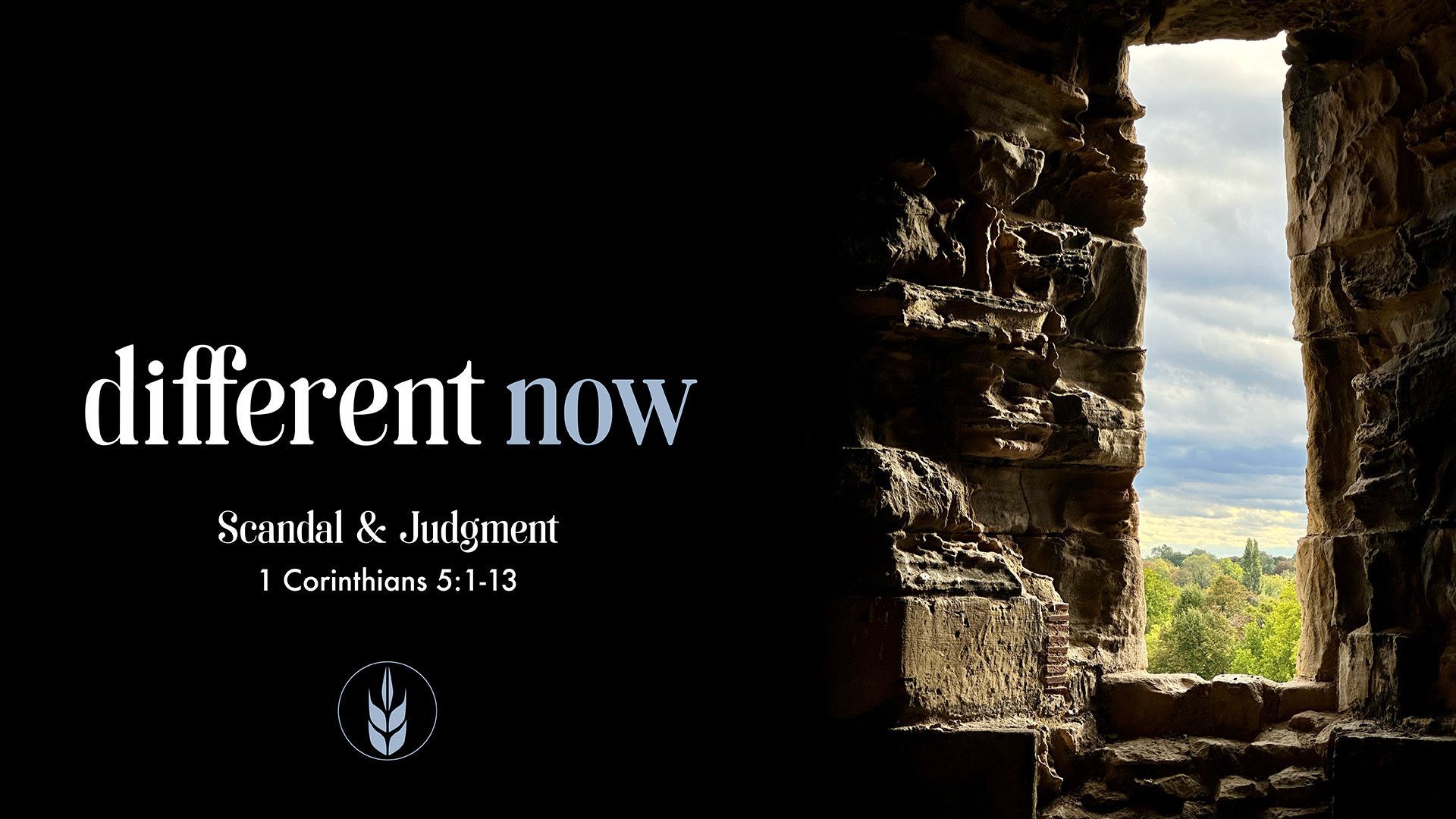

Living as a New Creation: Understanding Church Discipline and Community Identity
The ancient city of Corinth had a reputation. Known for its lax moral standards and temple prostitution in worship of Aphrodite, sexual permissiveness was woven into the very fabric of Corinthian culture. Yet when the Apostle Paul wrote to the young church in this city, he confronted them about a sexual sin so egregious that even their pagan neighbors found it shocking: a man was sleeping with his stepmother, and the church was actually boasting about it.
This uncomfortable passage in 1 Corinthians 5 forces us to wrestle with difficult questions about judgment, community, and what it means to be transformed by Jesus. Rather than turning away from its challenging message, we can discover profound truths about grace, accountability, and the nature of Christian community.
The Misunderstanding About Judgment
When we hear about church discipline, many of us immediately think of Jesus' words: "Do not judge, or you too will be judged." This verse has become perhaps the most quoted scripture in our culture, often interpreted as a universal prohibition against any form of moral evaluation.
But Jesus wasn't condemning all judgment—He was speaking against self-righteous, hypocritical judgment. Later in that same passage, He tells us we can "judge a tree by its fruit." The kind of humble, truthful, sinner-to-sinner accountability within the church family is not only acceptable but necessary for spiritual health.
What Paul makes crystal clear in 1 Corinthians 5 is that judgment of the world belongs to God alone. The church has no business acting as the moral police of society, telling non-believers how to live. Unfortunately, this is exactly what the church has often become known for—pointing fingers at the world while ignoring sin within its own walls.
Instead, we have a responsibility to each other as family members to encourage one another toward holiness and Christ-likeness.
Four Old Testament Threads
To understand Paul's instructions, we need to recognize how he weaves together four distinct Old Testament themes:
Blood and Unleavened Bread: During the first Passover in Egypt, Israelite families were protected from the plague of death by marking their doorposts with the blood of a spotless lamb. Inside those blood-covered homes, they were safe. Outside, they faced death. God instituted an annual commemoration called the Feast of Unleavened Bread, during which families would purge all yeast from their homes and eat only unleavened bread for seven days.
Purging Out Evil: Throughout Deuteronomy, the phrase "purge the evil from among you" appears repeatedly in connection with serious offenses. Just as a little yeast works through an entire batch of dough, certain sins could corrupt an entire community if left unaddressed.
Sexual Boundaries: Deuteronomy 27 specifically curses anyone who sleeps with his father's wife, and "all the people shall say amen." This wasn't a controversial boundary—it was universally recognized as wrong.
Corporate Identity: Unlike our individualistic Western culture, ancient Israel understood themselves as a collective people. When one person sinned, it affected everyone. In Joshua 7, when one man named Achan took forbidden plunder, God's anger burned against all of Israel. They were treated as one body.
Paul brings all these threads together in his letter to Corinth. Christ is our Passover lamb who has been sacrificed. We are now the household covered by His blood. We're called to be an "unleavened" community—purged of the corrupting influence of unrepentant sin. And we're one body, deeply connected to each other in ways we often fail to recognize.
Who Is Paul Talking About?
This is crucial: Paul is not talking about Christians who struggle with sin. Every genuine church is filled with imperfect people who fall short daily. We're all sinners saved by grace, learning to walk in repentance and confession.
Paul is addressing someone who claims to follow Jesus while flagrantly, openly, and persistently engaging in serious sin without any willingness to repent. This person, when confronted, essentially says, "I don't care what God or anyone else thinks. This is how I'm living, and I'm not changing."
If you're reading this and wondering, "Am I that person?" the very fact that you're concerned means you're not. That concern reveals a heart open to God's conviction and transformation.
The Implications for Community
We live in a culture that prizes privacy and individualism. The idea of corporate accountability can feel invasive or judgmental. But Scripture presents a radically different vision: we are members of one body. When one part suffers, all suffer. When one part is honored, all rejoice.
This means our private decisions aren't actually private. What we do with our bodies, our time, our relationships, our resources—all of it affects the community. We don't sin in a vacuum.
This isn't about becoming the "sin police," constantly scrutinizing everyone's behavior. It's about recognizing our deep interconnection and taking seriously our impact on each other and on the church's witness to the world.
Are you isolated? Have you made space in your life for relationships where people actually know you, see you, and can speak truth to you? Community isn't optional for followers of Jesus—it's essential to our spiritual formation.
Becoming What We Already Are
Perhaps the most beautiful phrase in this challenging passage is found in verse 7: "Get rid of the old yeast so that you may be a new unleavened batch, as you really are."
Become what you are.
Through Christ's death and resurrection, God has made you new by sheer grace. You have a new identity, a new nature, a new family. Now live into it. Work out the implications of following Jesus in every detail of your life.
This is the ongoing work of transformation—not earning God's love or trying to become worthy, but surrendering daily to the One who has already declared us worthy through His blood. It's examining our hearts, confessing our sins, repenting when we fall short, and allowing the Holy Spirit to shape us into the image of Christ.
We are different now. That difference should show up in how we speak, how we spend, how we relate, how we work, how we rest, and how we love. Every area of life comes under Jesus' loving management.
The goal is never condemnation but redemption. Even in the severe case Paul addresses, the hope was that removing the man from fellowship would bring him to his senses so he could repent and be restored—which apparently happened, based on Paul's later letter.
We are a community of grace, marked by the blood of the Lamb, learning together to become who we already are in Christ.
Living Out Grace, Accountability, and New Identity
What does church discipline mean in a healthy Christian community?
Church discipline is about loving accountability, not punishment or control. It helps protect the spiritual health of the community and invites people back toward repentance and restoration. At its best, it reflects grace and truth working together. The goal is always healing, not shame.
Does the Bible really say Christians shouldn’t judge others?
Jesus warns against hypocritical, self-righteous judgment, not all forms of discernment. Within a church family, there is a place for humble, honest accountability. This kind of “judging” comes from a shared desire to follow Jesus more closely. It’s about helping one another grow, not tearing each other down.
How can I tell the difference between struggling with sin and living in unrepentant sin?
Struggling with sin involves awareness, conviction, and a desire to change—even if progress is slow. Unrepentant sin, by contrast, is marked by ongoing, open behavior with no willingness to turn back. If you’re concerned about your sin, that’s often a sign your heart is still responsive to God. Grace meets us in the struggle, not in denial.
Why does my personal behavior matter to the church community?
Scripture teaches that believers are deeply connected, like parts of one body. What we do privately can impact others spiritually, relationally, and even publicly. This isn’t meant to create pressure, but to highlight our shared life together. Your choices matter because you matter to the community.
What does it mean to “become what you already are” in Christ?
In Jesus, you’ve already been given a new identity by grace. Becoming what you are means living in alignment with that reality over time. It’s a daily process of surrender, growth, and transformation through the Holy Spirit. You’re not earning God’s love—you’re learning to live from it.
Hit play to listen to the sermon this blog is based on
At Harvest Vineyard, we believe we are better together, in community. We're glad you're here.

ENCOUNTER CHRIST.
EXPERIENCE COMMUNITY.
LOVE THE WORLD.
We believe that experiencing the love and mercy of God is more effective in bringing change to people's lives than rules, guilt, and condemnation. We have attempted to make our community a place where people can come as they are and still experience love and mercy. At the same time, we desire to learn and apply the truth of God to our lives and learn how to speak truth to one another.