
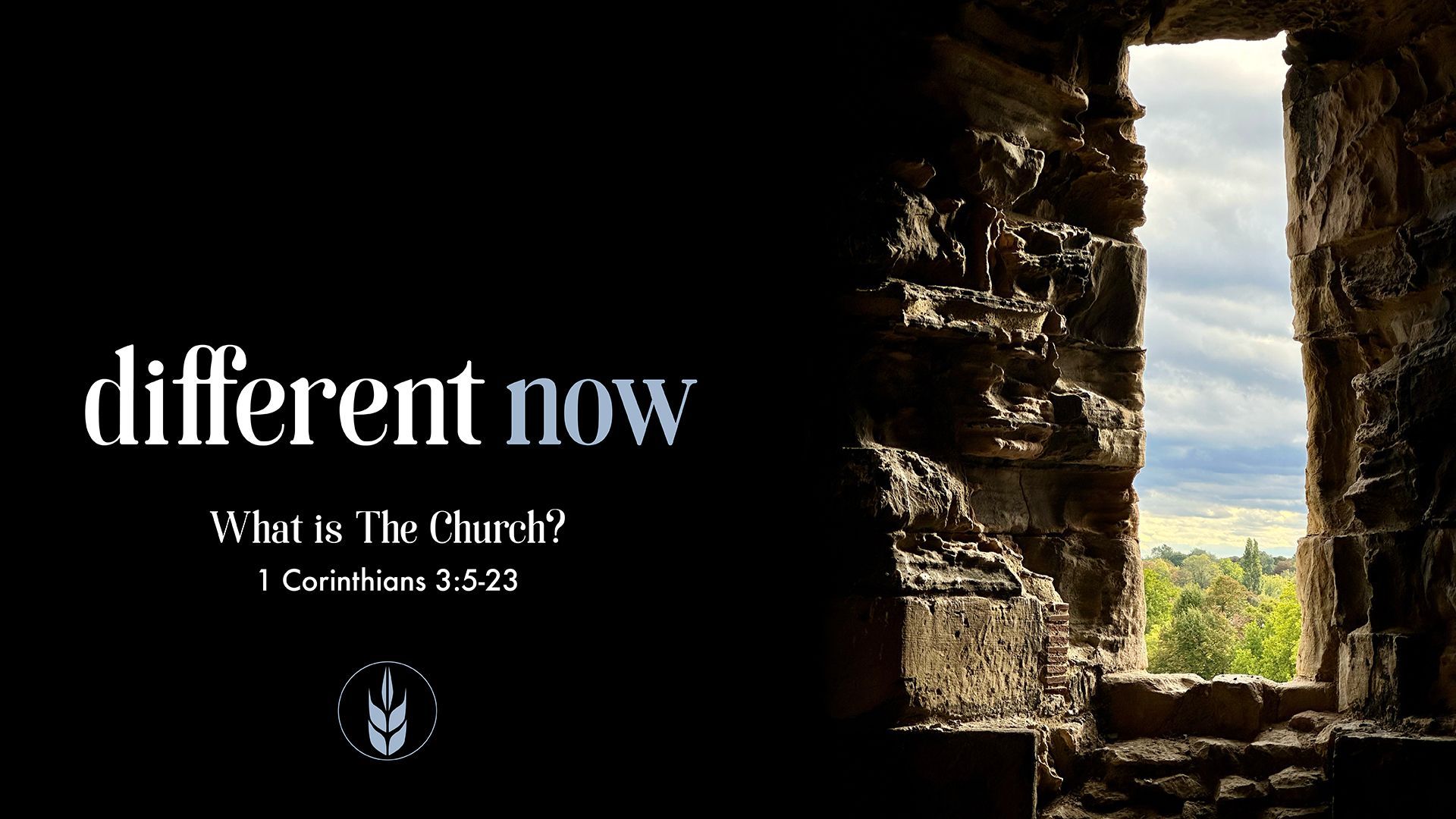

The Church: God's Field, Building, and Temple
What comes to mind when you hear the word "church"? For many, it might conjure images of a building with steeples and stained glass, or perhaps a gathering where people sing songs and listen to a message. But what if the church is something far more profound—something that transcends buildings, programs, and even our individual preferences?
The Apostle Paul's letter to the Corinthians offers a stunning vision of what the church truly is, using three powerful metaphors that challenge our assumptions and invite us into a deeper understanding of God's design for His people.
Not What You Think
Before we explore what the church is, let's clarify what it isn't. The church is not merely a material building—it's not the bricks, mortar, or sanctuary that shelters us from the elements. It's not simply a crowd of people who gather weekly with no real connection to one another or to God. The church isn't a social club where membership is based on shared interests or demographics. And it certainly isn't just another human organization with committees, bylaws, and hierarchies.
Instead, the church is something altogether different—something supernatural.
The Greek word for church, ekklesia, literally means "the called out ones." It refers to an assembly of people who have been called out by God to be an alternative community—a family marked by their relationship with Jesus Christ. This gathering of believers, connected to God and to one another, is what makes the church unique in all the world.
God's Field: A Vision for Harvest
In 1 Corinthians 3, Paul uses the metaphor of a field to describe the church. He reminds the Corinthians that leaders like himself and Apollos are merely servants—tools in the hand of a master gardener. One plants, another waters, but it's God who causes the growth.
This agricultural imagery would have resonated deeply with Paul's first-century audience, and it speaks powerfully to us today. A farmer doesn't cultivate a field for its own sake; they do so with a harvest in mind. They prepare the soil, plant seeds, water, and weed—all with the expectation that months later, there will be a bountiful yield.
The church as God's field points us toward outreach and evangelism. Jesus didn't endure the cross so that churches could argue about carpet colors or hold endless committee meetings. He came to seek and save the lost, to invite people into a transformative relationship with the Father. There are people all around us who haven't yet experienced God's love, and the church exists, in part, to extend that invitation.
The beautiful paradox is that we get to participate in this divine work. Paul describes believers as "co-workers in God's service"—a word that gives us our English term "synergy." There's a powerful collaboration between God and His people as we bear His presence into the world, serving others, praying for them, and watching for what God wants to do in specific situations.
God's Building: A Call to Maturity
Paul shifts his metaphor from field to building, reminding the Corinthians that he laid a foundation as a wise builder, but others are now building upon it. The foundation, he insists, is Jesus Christ—no other foundation can be laid.
This image would have been particularly vivid for the Corinthians. Their city had been destroyed and burned in 146 BC, and a century later, the Romans began rebuilding it. As Paul wrote, construction was still ongoing throughout Corinth. People could see buildings being erected with various materials—stone, precious metals, wood, hay, and straw.
Paul warns that the quality of materials matters. A day of testing is coming when fire will reveal what kind of work has been done. Buildings constructed with cheap substitutes and shoddy materials won't survive.
If the field represents outreach, the building represents maturity and stability. Jesus doesn't want His church to remain in perpetual infancy—a nursery full of oversized babies demanding constant attention. Spiritual immaturity sounds like "feed me, serve me, notice me, care for me." It's self-focused and consumer-oriented.
Maturity, by contrast, comes with expectation and generosity. A mature believer approaches gathering with the church by asking, "God, who do You want to encourage through me today? Who needs prayer? What do You want to do?" They come not just to receive but to give, not just to be served but to serve.
The foundation must always be Jesus Christ—not personalities, political ideologies, doctrines divorced from relationship, or worldly wisdom. When anything else tries to occupy the building site, the structure becomes unstable and vulnerable to collapse.
God's Temple: The Place of Presence
The third and perhaps most stunning metaphor Paul uses is that of the temple. "Don't you know that you yourselves are God's temple and that God's Spirit dwells in your midst?" he asks.
This isn't individual language—it's corporate. Paul isn't saying each person is a temple (though he makes that point elsewhere). Here, he's saying that the gathered community of believers together constitutes God's temple.
In the Old Testament, the temple was where heaven and earth intersected, where God's presence dwelt, where priests gained the mind of God and taught His law, where people came to pray and worship. When Solomon dedicated the temple, God's glory was so overwhelming that the priests couldn't even stand.
Now, Paul declares, the church has become that dwelling place. Not a building made of stone, but a community of people connected in relationship with God and one another. The church is where God communicates to people and people communicate to God. It's the intersection of the divine and human, the place where God's presence is tangibly experienced.
This is both privilege and responsibility. The church can be destroyed—not by physical forces, but by spiritual neglect. Building with bad materials, tolerating idolatry, ignoring serious problems, substituting guilt and manipulation for the Spirit's leading, focusing on outward performance rather than genuine transformation—all these can damage or destroy what God is building.
All Things Are Yours
Paul concludes with a breathtaking reminder: stop boasting about human leaders. All things are yours—whether leaders, the world, life, death, the present, or the future. All belong to you because you belong to Christ, and Christ belongs to God.
There's no scarcity in God's kingdom. His faithfulness can't be counted, His promises can't be contained. Everything belongs to those who belong to Jesus.
When we gather as the church—whether in large groups or small, inside buildings or outside, in cities or countryside—we're not just attending an event. We're entering into the presence of the living God. We're participating in something that transcends our time and place, joining with believers across centuries and continents who have experienced the same Spirit dwelling in their midst.
We're God's field, expecting a harvest. We're God's building, growing in maturity. We're God's temple, bearing His presence into a world that desperately needs to encounter Him.
That's the church. Not a building. Not a program. But a living, breathing community where the Spirit of God dwells, and through which God is renewing all things.
Living Out What the Church Truly Is
What does the Bible say the church really is?
The Bible describes the church not as a building, but as a community of people called by God. In 1 Corinthians 3, Paul says the church is God’s field, God’s building, and God’s temple. That means the church is a living, growing, Spirit-filled people. It’s about relationship with Jesus and one another, not bricks and mortar.
How can I know if I’m spiritually maturing in my church community?
Spiritual maturity shifts your focus from “What am I getting?” to “How can I serve?” A growing believer looks for ways to encourage, pray for, and strengthen others. Maturity is built on the foundation of Jesus, not preferences or personalities. Over time, you begin to reflect Christ’s generosity, stability, and love.
What does it mean that the church is God’s temple today?
It means God’s presence dwells among His gathered people. The church becomes a place where heaven and earth meet—where people encounter God together. This is both a gift and a responsibility, calling us to protect unity and pursue genuine transformation. When believers gather in faith, God is actively present.
Why does outreach matter if the church is already established?
Because the church is described as God’s field, and fields are cultivated for harvest. God’s heart has always been to seek and save the lost, inviting more people into His family. Outreach isn’t an optional program—it’s part of our identity. We participate with God in planting and watering, trusting Him for growth.
What happens when a church builds on something other than Jesus?
When a church centers itself on personalities, politics, or preferences, it becomes unstable. Paul warns that only what is built on Christ will endure testing. Foundations matter because they determine long-term strength. Returning to Jesus as the center restores clarity, unity, and spiritual health.
Hit play to listen to the sermon this blog is based on
At Harvest Vineyard, we believe we are better together, in community. We're glad you're here.
ENCOUNTER CHRIST.
EXPERIENCE COMMUNITY.
LOVE THE WORLD.
We believe that experiencing the love and mercy of God is more effective in bringing change to people's lives than rules, guilt, and condemnation. We have attempted to make our community a place where people can come as they are and still experience love and mercy. At the same time, we desire to learn and apply the truth of God to our lives and learn how to speak truth to one another.