
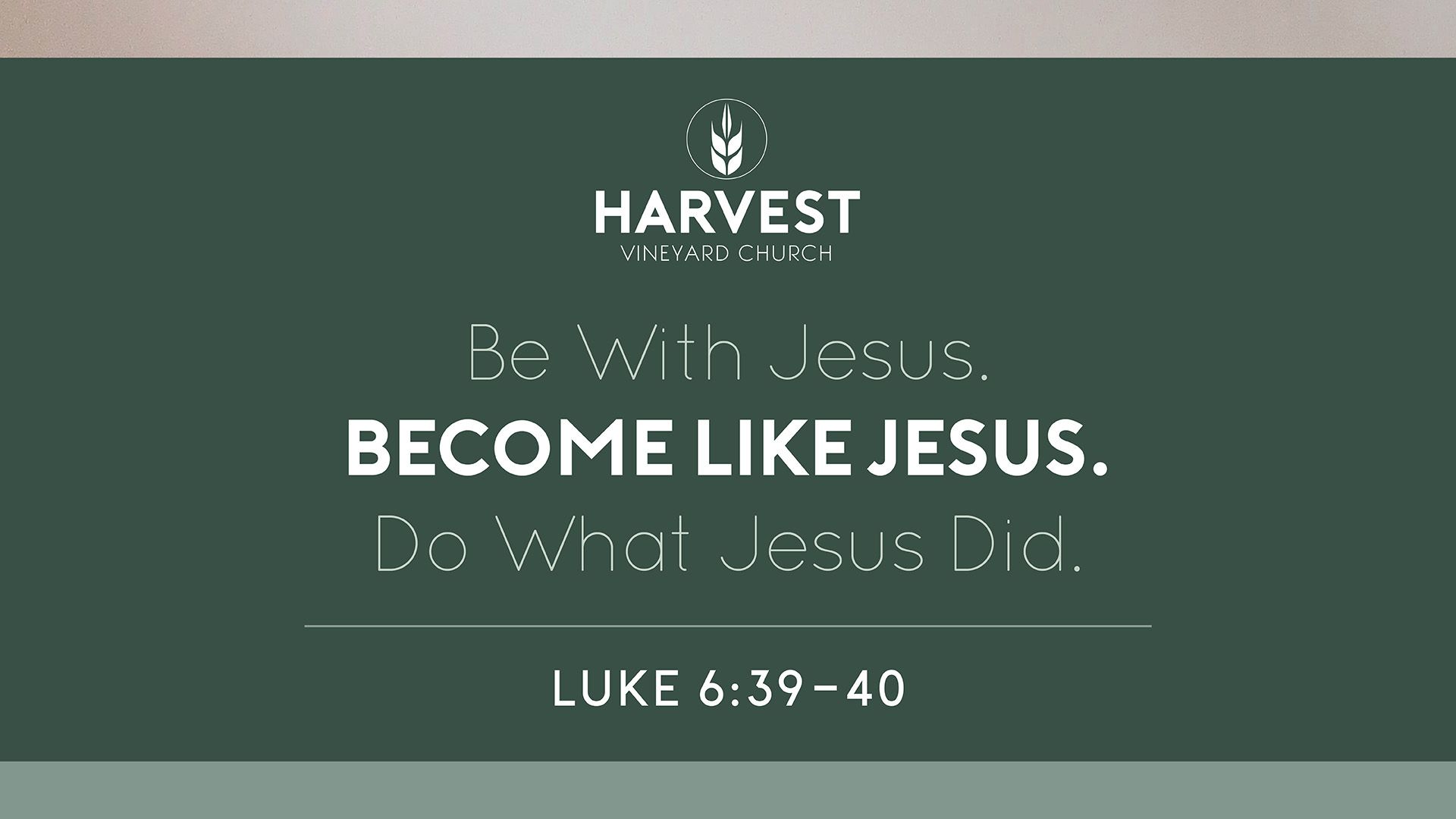

The Journey of Becoming: Transformation in the Way of Jesus
We're all becoming someone. Whether we realize it or not, every day we're being shaped and formed by our experiences, relationships, habits, and the stories we believe. The question isn't if we're changing—it's who we're becoming.
Sometimes transformation happens quickly, like watching teenagers seemingly grow overnight. Other times it's painfully slow, almost imperceptible—a lesson here, a shift in perspective there, a glimmer of self-awareness emerging after years of difficulty. But make no mistake: we are all on a trajectory, moving toward a particular kind of person.
The Ancient Invitation
In the first century, when a rabbi called someone to follow him, there were three clear goals for every disciple: to be with their rabbi, to become like their rabbi, and to do as their rabbi did. There was even a saying that you would be "covered in the dust of your rabbi"—you'd follow so closely that as they walked the dusty streets, you'd be covered with their dust.
This is the heart of discipleship. And it's the invitation Jesus extends to each of us: "Come, follow me."
In Luke chapter 6, we find Jesus on one of his most remarkable ministry days. People from all over Judea, Jerusalem, and the coastal regions had come to hear him and be healed. The text tells us that "power was coming from him and healing them all." After this incredible demonstration of the kingdom of God, Jesus began to teach, explaining what God's kingdom is really like.
In the middle of this teaching, Jesus told what might be his shortest parable: "Can the blind lead the blind? Will they not both fall into a pit? The student is not above the teacher, but everyone who is fully trained will be like their teacher."
This simple statement contains profound truth about transformation. Jesus isn't primarily concerned with how much information we accumulate. He's focused on who we're becoming. A student can be transformed into the image of their teacher—but notice that training is involved, it happens in stages, and it takes time.
There are no instant apprentices.
The Promise of Transformation
The Bible uses a powerful word to describe this kind of change: transformation. In 2 Corinthians 3:18, we read: "And we all, who with unveiled faces contemplate the Lord's glory, are being transformed into his image with ever-increasing glory, which comes from the Lord, who is the Spirit."
The Greek word translated as "transformed" is where we get our word "metamorphosis"—the process by which a caterpillar becomes a butterfly. This isn't a minor adjustment or a slight improvement. It's a fundamental change in form, a complete transformation from one thing into something entirely different.
But is this kind of transformation really possible?
The answer is yes—but we need to understand what spiritual formation actually means. Here's a helpful definition: Spiritual formation in the way of Jesus is the process of being formed into a person of love in Christ.
Let's unpack that.
Understanding the Process
First, it's a process. This means it's not always quick, easy, or linear. It requires a long-term view. Many of us who have been following Jesus for years experience a strange tension: immense gratitude for how far we've come, alongside frustration that we haven't progressed faster. We're works in progress, and that's okay.
We live in a culture obsessed with instant gratification—10-second dopamine hits from our phones, same-day Amazon deliveries. But the best things in life develop over months, years, and decades. A weed shoots up in days but gets blown around by every wind and dies in the fall. An oak tree grows over decades, becoming strong, beautiful, and powerful.
God is growing oak trees, even when we want microwave transformation.
Second, it's a process of being formed. We cannot form ourselves into the image of Jesus. Transformation is something done to us by God—yet we're not passive. God provides what's needed, and we have a role to play. As Saint Augustine said in the fourth century: "Without God, we cannot. Without us, God will not."
Jesus himself said, "Apart from me, you can do nothing" (John 15:5). We start from the understanding that we have nothing on our own, that salvation and transformation are works of God. But our role is to make deeper and deeper layers of our lives available to him.
Third, we're being formed into a person of love. According to Jesus, love is the metric of all spiritual maturity. When Jesus talks about love, he uses the Greek word agape—unconditional, self-sacrificial surrender for the good of another, even at cost to yourself.
Here's a piercing question to measure spiritual maturity: Am I becoming a person of love to the people who know me best and that I interact with most frequently?
Not just the people at church on Sunday when we put our best foot forward, but our spouse, our children, our coworkers, the parents at the soccer game, the referee who makes a bad call. When we're tired, hungry, or interrupted—that's when we discover who we're really becoming. The pressure of life squeezes us, and whatever's inside comes out.
Finally, this is transformation in Christ. It's not just self-actualization or becoming our "true self." It's becoming a person in God who experiences deeper layers of surrender to and union with him.
The Forces That Form Us
We're all being formed by something or someone, whether we want to be or not. Consider these formative forces:
Stories: The narratives we believe shape what we do, don't do, and eventually become. For example, American culture tells a story about money that says more equals happiness. But Jesus tells a different story—about a God who owns it all and loves to care for us. Which story we believe determines who we become.
Habits: What we do regularly, we become. This includes not just physical habits but habits of mind—what we think about when bored, how we see other people, how we talk to ourselves.
Relationships: We become like the people we're with. We talk, dress, think, and act more like them.
Experiences: Especially challenging or painful ones. These either open doors to God's healing and transformation, or they open doors to lies, bitterness, and isolation.
Counter-Formation in the Way of Jesus
When we come to Jesus, we don't start with a blank slate. We've had years or decades of formation—and often deformation. Jesus wants to counter-form us back into what we should be and could be.
How? We push against false narratives by learning and applying the teachings of Jesus found in Scripture. Romans 12:2 says, "Do not conform to the pattern of this world, but be transformed by the renewing of your mind."
We push against unhealthy habits with spiritual practices—intentionally leaning into putting the truth of Jesus into our bodies and experiences. Prayer, service, generosity, silence, solitude—these disciplines, together with God's grace, create transformative experiences.
We pursue counter-formation in community. No one follows Jesus alone. Transformation happens in relationships that support, teach, expose, and encourage.
And we open our experiences to God, particularly places of pain, brokenness, sin, or rejection. When we welcome God into these avoided places, they become sites of major transformation.
The Intentional Path
Formation doesn't happen by accident. It requires intentionality. Think about how much intention and discipline we put into our careers, health, parenting, hobbies, or summer vacations. Shouldn't we bring at least as much thoughtfulness to our spiritual formation?
The invitation remains: Come, follow Jesus. Stay with him. Be with him. Become like him.
It's not quick. It's not always easy. It unfolds over a lifetime. But as we are with him and work with him, allowing him to work in us, we are transformed by his presence.
We're all becoming someone. The only question is who.
A Simple Path Toward Becoming Like Jesus
How do I know who I am becoming in my everyday life?
We often discover who we’re becoming in the ordinary, unguarded moments of life. Pay attention to how you respond when you’re tired, interrupted, or under pressure—those reactions reveal what’s forming inside you. The people closest to you often experience the truest version of you, so their perspective can be a helpful mirror. Growth begins with honest awareness, not perfection.
Why does spiritual growth feel so slow and inconsistent?
Spiritual formation is a long process, not a quick fix, and it rarely moves in a straight line. You may feel both gratitude for progress and frustration at how far you still want to go—and both are normal. God is shaping something deep and lasting, more like an oak tree than a fast-growing weed. Trust that steady, unseen growth is still real growth.
What does it actually mean to be transformed by Jesus?
Transformation in the way of Jesus means becoming a person of love—someone shaped by his character and presence. It’s not just about learning information, but about being changed from the inside out. This kind of change happens as we stay close to Jesus and allow him to work in our lives. Over time, our thoughts, desires, and actions begin to reflect his.
What practical steps can I take to grow spiritually?
Spiritual growth happens through intentional practices and relationships, not by accident. Simple rhythms like prayer, reading Scripture, serving others, and practicing generosity help shape your heart over time. Being in community with others who follow Jesus also plays a key role in transformation. As you make space for God in these ways, he does the deeper work within you.
What are the biggest influences shaping who I become?
We are constantly being formed by the stories we believe, the habits we practice, the relationships we keep, and the experiences we go through. These influences can either draw us closer to Jesus or pull us away from him. Becoming aware of them helps you choose what to lean into and what to resist. With God’s help, even difficult experiences can become places of healing and growth.
Hit play to listen to the sermon this blog is based on
At Harvest Vineyard, we believe we are better together, in community. We're glad you're here.


ENCOUNTER CHRIST.
EXPERIENCE COMMUNITY.
LOVE THE WORLD.
We believe that experiencing the love and mercy of God is more effective in bringing change to people's lives than rules, guilt, and condemnation. We have attempted to make our community a place where people can come as they are and still experience love and mercy. At the same time, we desire to learn and apply the truth of God to our lives and learn how to speak truth to one another.