

The Invitation to Simply Be: Discovering the Heart of Spiritual Formation
In a world that constantly demands our attention, productivity, and performance, there's a radical invitation echoing through the ages—an invitation that sounds almost too simple to be true: Come and be.
The Question That Changes Everything
Imagine being asked by someone you deeply respect: "What do you want?" Not as an impatient demand, but as a gentle invitation to examine the deepest longings of your heart. This is precisely the question Jesus posed to his first followers in John 1:38.
When John the Baptist's disciples began following Jesus, he turned and asked them this penetrating question. Their response revealed something profound: "Rabbi, where are you staying?" They weren't asking for directions to his house. The word they used—meno in Greek—means to abide, to remain, to dwell. They were essentially asking, "Can we be with you? Can we remain in your presence?"
Jesus' answer was beautifully simple: "Come and see."
This wasn't an invitation to a seminar on theology. It wasn't a call to perfect behavior before approaching him. It was an invitation to relationship, to proximity, to simply being with him.
The Culture That Forms Us
The early church in Corinth faced a significant challenge. They had encountered Jesus and committed to following him, but they still carried Corinth within them. The culture had shaped their thinking, their values, their reflexes. Sound familiar?
Romans 12:2 warns us: "Do not conform to the pattern of this world, but be transformed by the renewing of your mind." This transformation doesn't happen automatically. It requires surrender, intentionality, partnership with the Holy Spirit, and yes—a healthy dose of resistance to cultural formation.
We're remarkably good at letting culture shape us. It's the path of least resistance. But transformation into Christlikeness? That requires something different.
Three Goals, One Journey
The journey of spiritual formation can be distilled into three interconnected goals:
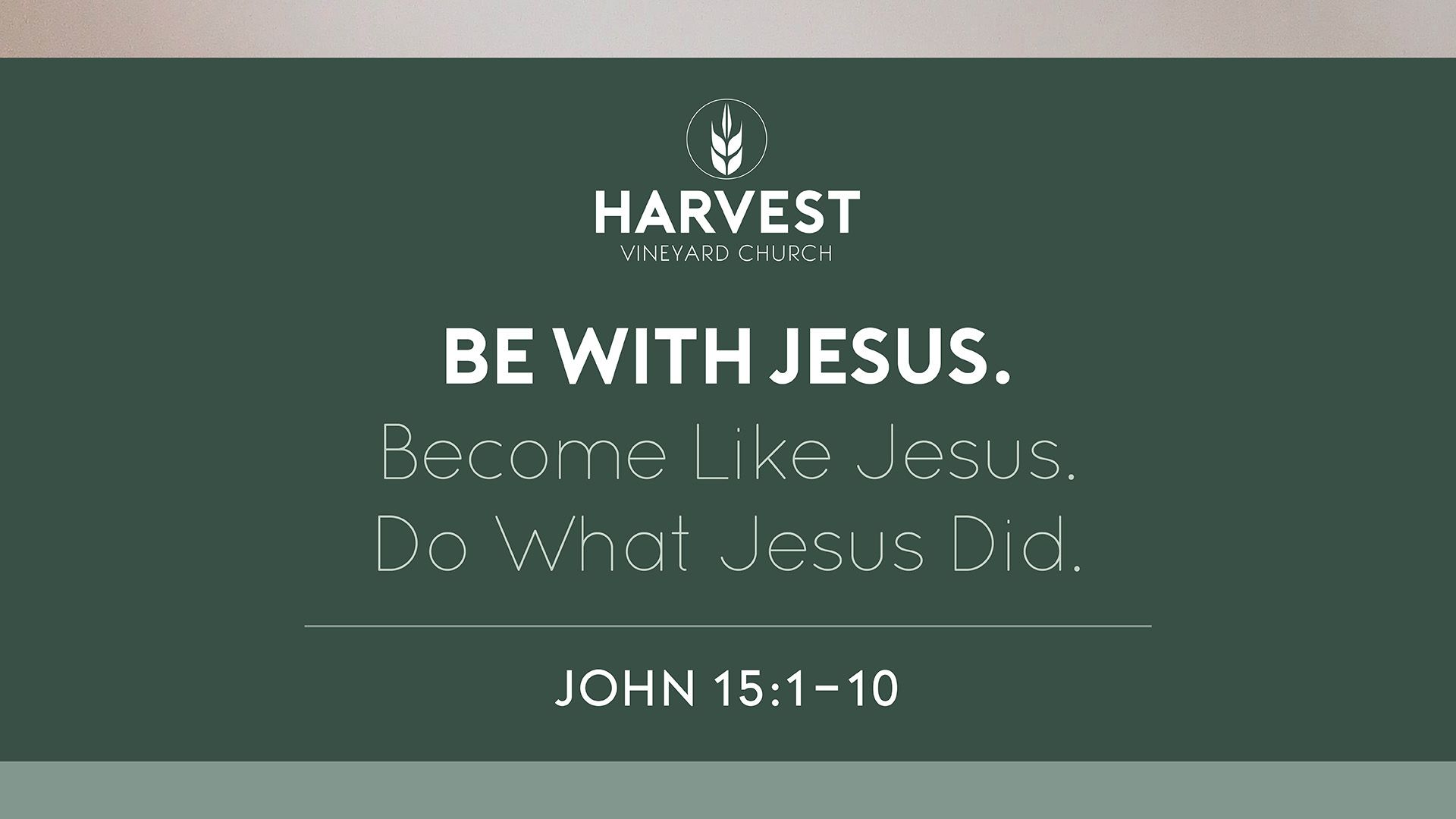
Be with Jesus. This is the foundation, the starting point, the essential posture.
Become like Jesus. As we spend time with him, transformation happens from the inside out.
Do what Jesus did. Our actions flow naturally from who we're becoming.
This pattern mirrors the ancient discipleship model. Disciples didn't just study their rabbi's teachings—they lived with him, watched him, absorbed his way of being in the world. They learned not just what he knew, but who he was.
The Gift of the Advocate
Before Jesus ascended, he made an extraordinary promise in John 14. He told his followers that he would send "another advocate"—the Holy Spirit—to be with them forever. The word "advocate" in Greek means "another like me" or "another one of me."
This is how we be with Jesus today. Through the Holy Spirit, we have access to the very presence of God. The same God who created galaxies and set stars in motion wants to be near us, with us, within us—always.
This isn't abstract theology. It's an invitation to walk through every ordinary moment of life in constant awareness of divine presence.
The Art of Remaining
In John 15, Jesus uses the metaphor of a vine and branches to illustrate this relationship. The word "remain" appears eleven times in just a few verses. In Greek, it's that same word—meno. Abide. Stay. Make your home in me.
"I am the vine; you are the branches," Jesus says. "If you remain in me and I in you, you will bear much fruit; apart from me you can do nothing."
This is the deepest longing of every human heart—to remain, to abide, to be connected to the source of life itself. We often misdirect this longing toward achievement, approval, success, or comparison. But only being with Jesus actually satisfies it.
Two Places at Once
Here's the revolutionary idea: We're learning to be in two places at the same time. Not physically, but spiritually. Making breakfast? Abide in the Father's presence. Commuting to work? Remain in his nearness. Answering emails? Stay connected to the vine.
Brother Lawrence, a 15th-century monk who washed dishes in a monastery, mastered this art. He wrote: "The time of business does not with me differ from the time of prayer. In the noise and clatter of my kitchen, while several persons are calling for different things, I possess God in as great tranquility as if I were upon my knees at the blessed sacrament."
Washing dishes or taking communion—both could be moments of equal intimacy with God.
The Fruit We Cannot Force
When we read Galatians 5 and encounter the fruit of the Spirit—love, joy, peace, patience, kindness, goodness, faithfulness, gentleness, self-control—we often turn it into a to-do list. We try to manufacture these qualities through willpower and effort.
But here's the truth: These aren't commands. They're fruit. You cannot will fruit into existence. A branch cannot force itself to produce grapes through sheer determination. Fruit is the natural result of remaining connected to the vine.
There's only one command in that entire passage: "Walk by the Spirit" and "keep in step with the Spirit." Everything else flows from that.
We have limited willpower. By mid-morning, most of us are running on fumes. We can act loving for a while, but we cannot be more loving without the Holy Spirit's power. The acting is exhausting. The being is transformative.
The Lifestyle Question
Consider this: Do you want to experience the life of Jesus—his peace, his joy, his love—without adopting his lifestyle?
It's like saying you want to be an Olympic athlete without training like one. We want the results without the pattern of life that produces them.
Jesus was never hurried. He spent significant time in community and significant time alone. He slept when tired. He practiced Sabbath. He lived simply. And he was at peace—always.
We live in a culture of anxiety, digital addiction, overconsumption, sleep deprivation, and chronic busyness. Then we wonder why we lack peace.
Peace is a byproduct of apprenticeship to Jesus. It comes from aligning our lives with his pattern, his rhythm, his way.
What Are You Abiding In?
Here's a diagnostic question: What are you actually abiding in? Anxiety? Success? Bitterness? Fear? Shame? Inadequacy?
Whatever we abide in, we become. What we give our attention and affection to shapes us. We become more and more like that which we behold.
Neuroscience confirms what Scripture has always taught: Every thought we think digs a rut in our brain. With repetition, these ruts get deeper until we can't not drive in them. This is why Romans 12:2 commands us to be transformed by the renewing of our minds.
When we think about God's goodness, beauty, and peace throughout our day, we dig new ruts. We create new patterns. We develop new defaults.
First Thoughts and Last Thoughts
Most of us, when our minds are idle, default to negative thinking or distraction. We leap to the future or ruminate on the past. We grab our phones to escape the discomfort of our own thoughts.
But consider this: The first thought in your mind in the morning and the last thought before sleep have disproportionate effectiveness on the kind of mind you develop in between.
What if, instead of reaching for your phone first thing, you paused to be with Jesus? What if, instead of scrolling before bed, you rested in his presence?
This isn't about perfection. It's about intentionality. It's about creating space for the relationship that matters most.
The Reward of Prayer
Prayer isn't primarily about asking for things or interceding for others, though those have their place. The reward of prayer is the abiding itself. The reward is being with Jesus.
What if throughout your day, your prayer was simply pausing to set your gaze on him? To notice that he delights in you? To linger in his presence?
This is a slowing process. It will slow you down. It's also a slow process to learn—it could take years or a lifetime. But what we do with our thoughts is a freedom no one can take from us.
Practical Steps Forward
The invitation is clear, but how do we respond? Here are some possibilities:
Find 10 minutes. Americans spend over five hours daily on smartphones. Carve out just 10 minutes to quiet your mind and body and be with Jesus.
Simplify your life. Cut out unnecessary activities. Refuse the world's demand for constant rushing. Create margin.
Charge your phone outside your bedroom. Protect your first and last thoughts of each day.
Practice gratitude. Let thankfulness for the gift draw you toward the Giver.
Take walks with Jesus. Move your body while remaining in his presence.
Embrace Sabbath. Rest isn't laziness; it's trust. It's declaring that the world doesn't depend on your constant productivity.
These aren't legalistic requirements. They're invitations to position yourself to receive what God wants to give.
The Invitation Still Stands
Whether you've followed Jesus for decades or are just curious about him, the invitation is the same: Come. Just come. Be with me.
This is the first step, the foundation, the essential posture. Not doing more, but being more fully present to the One who is always present to you.
The journey of transformation begins not with striving, but with surrendering. Not with achieving, but with abiding. Not with doing, but with being.
The question remains: What do you want? And will you accept the invitation to come and see?
Simple Ways to Grow a Life with Jesus
How do I actually “be with Jesus” in my everyday life?
Being with Jesus starts with simple awareness of his presence, not complicated routines. It can look like pausing for a few minutes, talking to him honestly, or quietly noticing that he is with you. Over time, this awareness can carry into ordinary moments like driving, working, or making meals. The goal isn’t perfection, but growing in a steady, relational connection throughout your day.
Why do I still feel shaped by culture even though I follow Jesus?
It’s normal to feel this tension because we are constantly being formed by the world around us. Transformation doesn’t happen automatically—it requires intentional choices and openness to the Holy Spirit. As you begin to renew your mind and resist unhealthy patterns, new ways of thinking and living take root. Over time, your life will reflect more of Jesus than the culture around you.
What does it mean to “abide” in Jesus, and why does it matter?
To abide means to remain, stay connected, and make your home in Jesus’ presence. It’s less about striving and more about staying close to him in a relational way. When you remain connected to him, spiritual growth happens naturally, like fruit growing on a branch. This connection is the source of lasting peace, joy, and transformation.
Why can’t I just try harder to have more love, peace, or patience?
While effort has a place, the qualities we long for are described as fruit, not achievements. Fruit grows as a result of connection, not pressure or performance. When you rely only on willpower, it often leads to frustration and exhaustion. But as you walk with the Spirit, these qualities begin to form in you from the inside out.
What are some simple ways to start practicing this kind of relationship with Jesus?
You can begin with small, intentional steps like setting aside ten quiet minutes each day. Creating space by simplifying your schedule or limiting phone use can help you become more aware of God’s presence. Practices like gratitude, walking, or resting can also become moments of connection. These aren’t rules, but gentle ways to position yourself to receive what God is already offering.
Hit play to listen to the sermon this blog is based on
At Harvest Vineyard, we believe we are better together, in community. We're glad you're here.

ENCOUNTER CHRIST.
EXPERIENCE COMMUNITY.
LOVE THE WORLD.
We believe that experiencing the love and mercy of God is more effective in bringing change to people's lives than rules, guilt, and condemnation. We have attempted to make our community a place where people can come as they are and still experience love and mercy. At the same time, we desire to learn and apply the truth of God to our lives and learn how to speak truth to one another.