
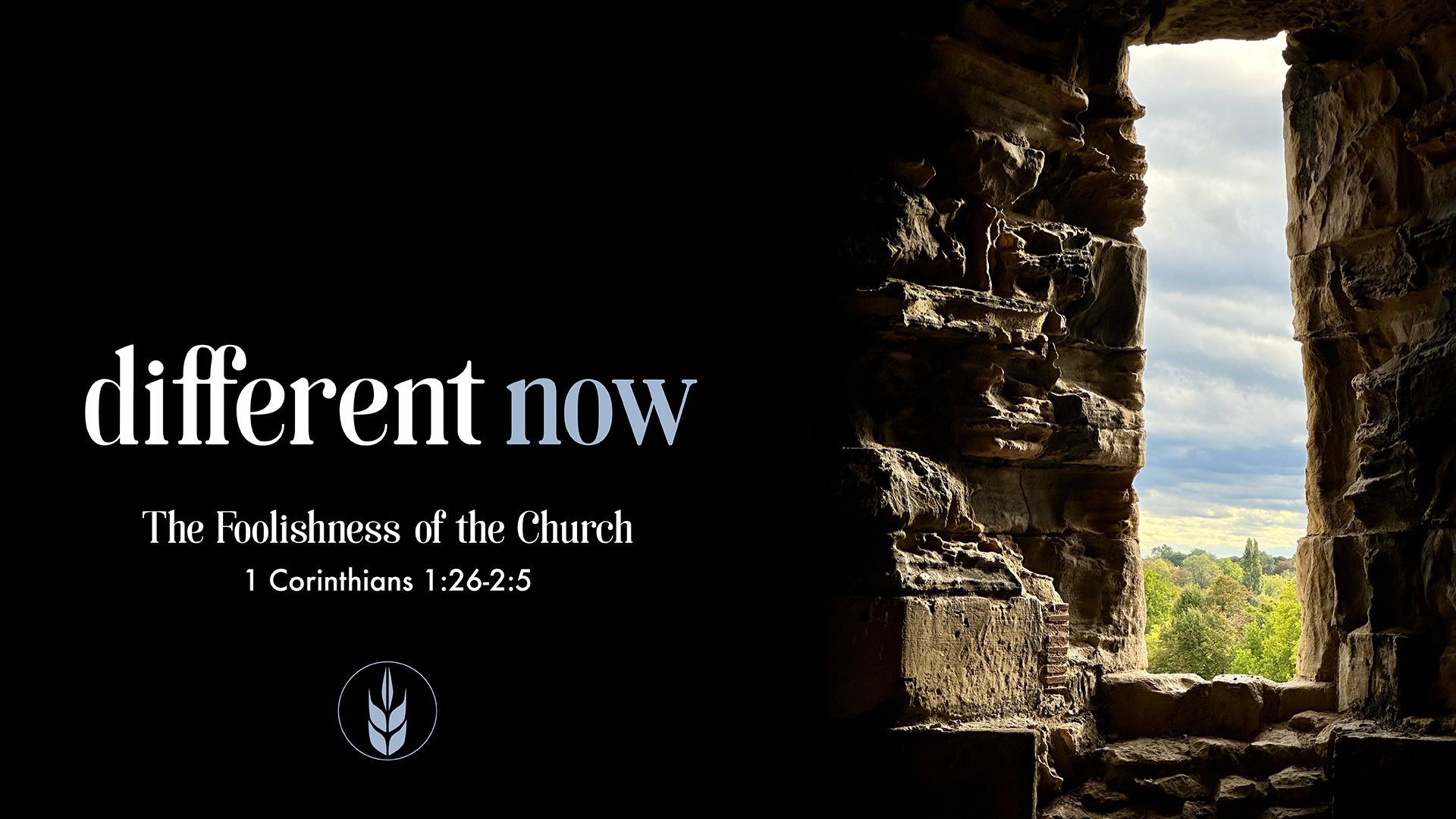

The Foolishness That Shames the Wise: Discovering God's Upside-Down Kingdom
There's something deeply countercultural about the Christian faith. It doesn't follow the world's playbook for success, power, or influence. Instead, it turns everything upside down—or perhaps more accurately, it turns everything right-side up.
When we open the pages of 1 Corinthians, we find the Apostle Paul addressing a young church struggling with divisions. They were fragmenting over status, personalities, and the secular values creeping into their community. Sound familiar? The church in Corinth faced challenges that mirror our own: comparison, competition, and the temptation to measure worth by worldly standards.
Remember Who You Were
Paul's words cut through the noise with startling directness: "Brothers and sisters, think of what you were when you were called. Not many of you were wise by human standards. Not many were influential. Not many were of noble birth."
This isn't meant to be insulting—it's meant to be liberating.
The early Corinthian church was small, perhaps sixty people meeting in someone's home. Only about ten percent would have been wealthy or influential. The majority were freedmen and freedwomen, former slaves who had come to the prosperous city of Corinth hoping to make something of themselves. They were nobodies by the world's standards.
And that was exactly the point.
God chose them—not despite their lack of status, but precisely because of it. He chose "the foolish things of the world to shame the wise" and "the weak things of the world to shame the strong." Why? So that no one could stand before God claiming credit for their own salvation.
This is radical. In a world obsessed with credentials, connections, and climbing social ladders, God levels the playing field entirely. The ground at the foot of the cross is perfectly flat. Rich or poor, powerful or weak, influential or invisible—none of it matters. The only requirement for coming to Christ is getting over ourselves.
The Scandal of the Church
If the cross itself seems foolish to the world, the church is its second great scandal.
An ancient letter written about a hundred years after Paul's correspondence describes how bizarre Christians appeared to their contemporaries. They came from every nation but belonged fully to none. They married and had children but didn't abandon unwanted infants as was common practice. They shared meals together across social boundaries that were never crossed elsewhere. They were poor yet made many rich. They were persecuted yet responded with love. They were dishonored yet glorified God.
Most shocking of all? In the church, men and women learned together as equals—unthinkable in the patriarchal society of the ancient world. Wealthy individuals celebrated communion with former slaves. Every barrier that divided humanity was being broken down by the unifying power of the gospel.
This wasn't just a nice religious gathering. This was a revolution.
The church demonstrated that God's foolishness is wiser than human wisdom, and God's weakness is stronger than human strength. Success in God's kingdom isn't defined by wealth, education, influence, or any other metric the world uses. It's defined by dependence on Jesus and growing in self-sacrificial love.
The Challenge for the Comfortable
Here's where things get uncomfortable for many of us. Most of us reading this aren't first-century peasants or former slaves. We're resourced, educated, and connected in ways the Corinthian believers could never have imagined.
When Paul says God chooses the insignificant to shame the powerful, or when Jesus says the meek will inherit the earth, how do we receive it? We need to approach Scripture with humility, recognizing that while it's certainly for us, it wasn't written to people in our position of privilege.
The gospel is radical for comfortable people. It calls us not to tame its message to endorse whatever we want, but to be transformed by it. For those of us with resources, that transformation looks like growing humility demonstrated through increasing hospitality and generosity.
The Gift of Being "In Christ"
At the heart of Paul's message is this stunning reality: "It is because of him that you are in Christ Jesus, who has become for us wisdom from God—that is, our righteousness, holiness, and redemption."
Being "in Christ" is Paul's favorite phrase, appearing some 150 times in his writings. It speaks to the deep union and oneness with God that defines salvation. It's not just forgiveness of sins—though it certainly includes that. It's intimate connection with the God of the universe. It's belonging to an eternal family. It's having your life hidden with Christ in God.
In Christ, we're accepted by God because of what Christ has done. We're purified and set apart for God's purposes. We're rescued from the power of sin and death. Everything good we do flows from this gift, empowered by God's Spirit working through us.
Boasting in the Right Thing
Paul concludes with a quote from the prophet Jeremiah: "Let the one who boasts boast in the Lord."
In the ancient world, boasting meant taking pride in something, putting your confidence in it, delighting in it most. And Paul says Christians boast in the Lord—we glory in Him, trust in Him, find our greatest delight in Him.
There's no room for boasting in ourselves, but plenty of room for bragging on God.
An Invitation to Open Hands
The call today is simple but profound: step into a posture of open-handed dependence on God. Release the things that divide. Unite around the gospel. Take your hands off your stuff and your life and allow God to lead you day by day.
If you're clinging to worldly definitions of success—whether that means feeling superior because you've achieved something or feeling worthless because you haven't—you're missing the point. God has already defined your worth. You're loved. You're chosen. You're in Christ.
And if you've never surrendered to Christ, today is your opportunity. Come to the end of yourself. Get over yourself. Open your hands and receive the gift of forgiveness, healing, life, and belonging that God offers.
The wisdom of God looks like foolishness to the world. But it's in that foolishness that we find true life, true community, and true transformation. May we be a people shaped by the cross—humble, loving, and self-sacrificial—bringing the upside-down kingdom of God into a world desperately in need of it.
Questions for Living the Upside-Down Way
What does it mean that God chooses the foolish things of the world to shame the wise?
It means God doesn’t measure worth the way the world does. He isn’t impressed by status, influence, or credentials, and He doesn’t overlook you because you lack them. In fact, our weakness creates space for His power to shine. The gospel levels the playing field and reminds us that everything we have is a gift.
How should Christians think about success and status in God’s kingdom?
In God’s kingdom, success isn’t about climbing higher but bowing lower. It’s measured by humility, love, and dependence on Jesus rather than achievement or recognition. When we loosen our grip on comparison and competition, we’re free to live with deeper joy. True greatness looks like self-giving love shaped by the cross.
What does it really mean to be “in Christ”?
Being “in Christ” means your identity is rooted in what Jesus has done, not what you’ve accomplished. It’s a deep union with Him—accepted, forgiven, and made new through His work. You belong to God’s family and share in His life. From that secure place, everything else begins to grow.
How can comfortable or successful people respond faithfully to the gospel?
The gospel invites us to hold our resources with open hands. Instead of using comfort to protect ourselves, we can use it to practice generosity and hospitality. Humility becomes the marker of maturity, not accumulation. When we let the message of the cross shape us, we become people who serve rather than dominate.
How do I stop boasting in myself and start boasting in the Lord?
Start by noticing where you place your confidence—career, reputation, achievements, even spiritual performance. Then gently shift your gratitude and trust back to God, remembering that every good thing comes from Him. Boasting in the Lord means delighting in who He is and what He has done. It replaces anxiety and pride with worship and freedom.
Hit play to listen to the sermon this blog is based on
At Harvest Vineyard, we believe we are better together, in community. We're glad you're here.

ENCOUNTER CHRIST.
EXPERIENCE COMMUNITY.
LOVE THE WORLD.
We believe that experiencing the love and mercy of God is more effective in bringing change to people's lives than rules, guilt, and condemnation. We have attempted to make our community a place where people can come as they are and still experience love and mercy. At the same time, we desire to learn and apply the truth of God to our lives and learn how to speak truth to one another.