
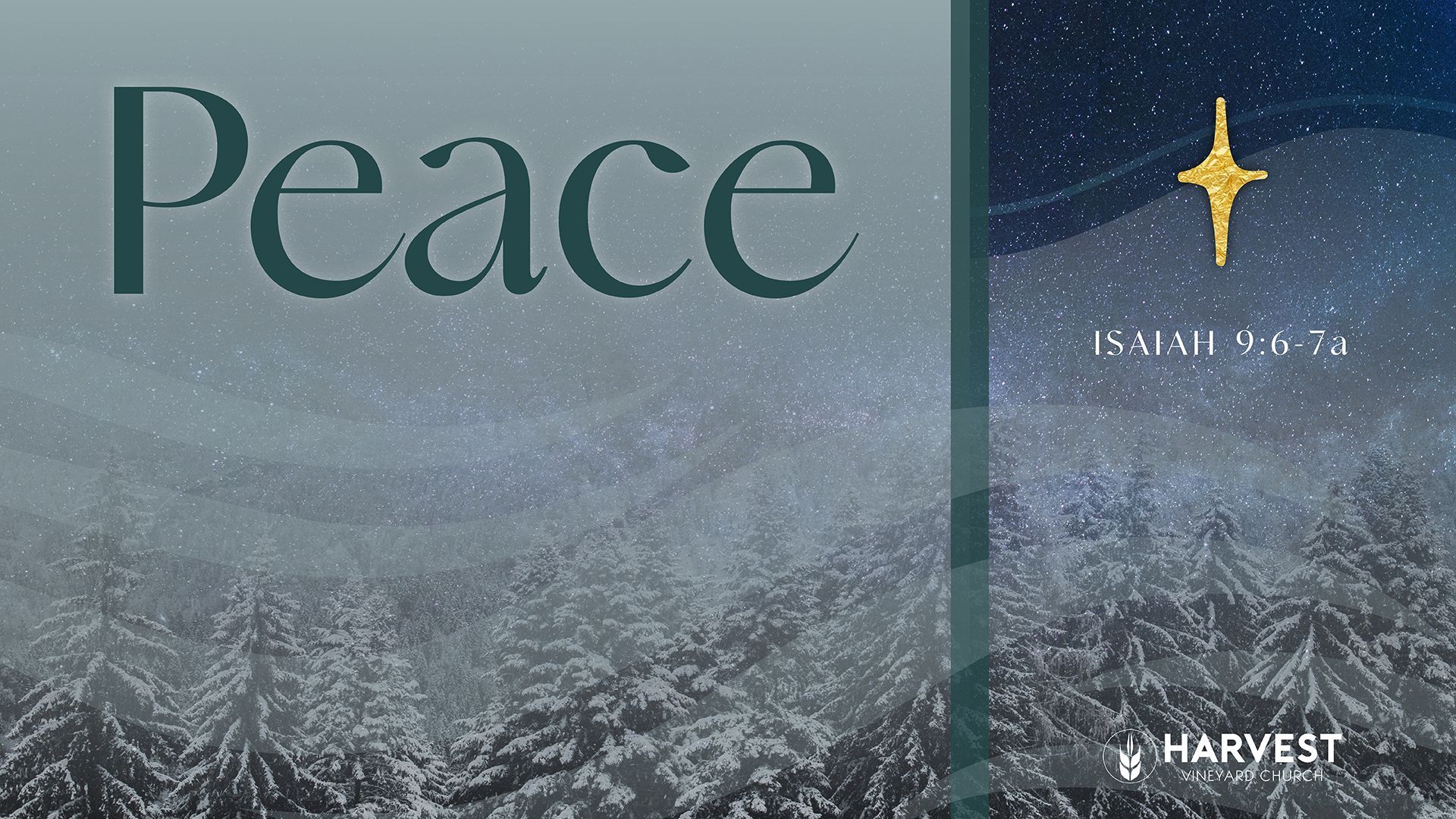

The Prince of Peace: Discovering True Shalom This Advent
In the midst of our busy lives, especially during the holiday season, we're invited to pause and consider a profound question: What do God's children do? While football players play football and drummers drum, the answer for followers of Christ is beautifully simple yet deeply challenging—God's children make peace.
A Different Kind of Peace
When the prophet Isaiah spoke of a coming child who would be called "Wonderful Counselor, Mighty God, Everlasting Father, Prince of Peace," he was prophesying something revolutionary. This wasn't just another ruler promising stability through power. This was something entirely different.
Consider the world into which Jesus was born. The Roman Empire had already established what they called peace—Pax Romana. There were festivals celebrating Caesar as the savior who brought peace and prosperity. But this peace came at a terrible cost. It was imposed through military violence, maintained through terror, and built on the suffering of conquered peoples. Roman soldiers stationed throughout cities served as constant reminders that this "peace" was really just the absence of rebellion, enforced by the threat of crucifixion.
Into this world of false peace, angels appeared to shepherds with a startling announcement: "Glory to God in the highest heaven, and on earth peace to those on whom his favor rests." The Prince of Peace had arrived—not with armies, not with political force, but quietly, vulnerably, in a manger.
Peace doesn't always come with power. Peace comes in presence.
Understanding Shalom
The Hebrew word Isaiah used was "shalom," and it means so much more than simply the absence of conflict. Shalom means wholeness, completeness, restoration. It's the difference between simply stopping a fight and actually healing a relationship.
Imagine a neglected community garden—soil compacted, trash scattered, weeds overtaking everything. The space feels abandoned and dead. Now picture someone who removes the trash, tills the soil, plants vegetables, repairs the fence, and invites neighbors in. That transformation from death to life, from disorder to flourishing—that's shalom.
This is what the Prince of Peace came to do. Wherever something is broken, he brings healing. Wherever there's division, he creates unity. Wherever there's death, he brings life.
The Yokes We Carry
Isaiah wrote that God would shatter "the yoke that burdens them, the bar across their shoulders, the rod of their oppressor." These yokes of oppression take many forms in our lives today.
There's the yoke of loneliness—what Mother Teresa called "the leprosy of the West," a poverty worse than material lack. There's the yoke of fear—fear of not having enough, fear of failure, fear of what others think, fear of death itself. The yoke of addiction and self-destructive patterns we can't seem to break. The yoke of bitterness about what life has dealt us. The yoke of unforgiveness toward those who've hurt us. The yoke of guilt and shame over our choices.
Many of us enter the Christmas season feeling anything but peaceful. We're weighed down by the pace of life, grief that resurfaces this time of year, family conflict, financial pressure, anxious thoughts, and a divided world. Christmas doesn't magically remove these realities. But Advent reminds us that God's presence enters them.
Becoming New Creations
The apostle Paul wrote, "Therefore, if anyone is in Christ, he is a new creation. The old has gone, the new is here!" Notice that word—anyone. Christianity is radically inclusive. A relationship with Jesus isn't determined by age, class, race, wealth, intelligence, family background, or whether you've lived a good life or made terrible mistakes. Anyone can enter into relationship with the Prince of Peace.
And when we do, we don't just get forgiveness—we become new creations. This isn't about pulling ourselves together or trying harder. This is God doing something in us that we could never do ourselves. He breaks off those yokes of oppression. He brings healing, forgiveness, and restoration. He makes us whole.
Paul continues: "All this is from God, who reconciled us to himself through Christ and gave us the ministry of reconciliation." God makes peace with us, and then he invites us to become peacemakers.
Living as Peacemakers
The Talmud describes an ancient Jewish practice that beautifully illustrates what it means to be a peacemaker. When pilgrims came to the temple in Jerusalem, they would typically turn right and circle the courtyard. But those who were brokenhearted would turn left instead. And everyone passing them had to stop and ask, "What happened to you? Why are you brokenhearted?" They had to pause their pilgrimage to listen and offer a blessing.
Imagine packing for your bucket-list holiday trip, ready to celebrate, and the last thing you want to do is slow down and ask someone, "Are you okay? What's your story?" Yet this is exactly what peacemakers do. They pause. They see. They listen. They bring the presence of Christ into suffering.
Being a peacemaker might look like forgiving someone who hurt you. Choosing gentleness in a heated family moment. Listening compassionately instead of reacting. Reconciling where there's been distance. Bringing a non-anxious presence into your workplace. Praying for someone who's overwhelmed.
Peacemakers don't avoid conflict—they bring the presence of Christ into it.
Welcoming the Prince of Peace
A simple prayer for this Advent season might be: "Prince of Peace, I welcome your presence." Take time each day to sit, breathe, and intentionally welcome Jesus. Peace is not simply the absence of conflict. It's the presence of a person.
Jesus said, "Peace I leave with you; my peace I give you. I do not give to you as the world gives. Do not let your hearts be troubled and do not be afraid." This is not the peace of perfect circumstances. We will have troubles. But God doesn't give as the world gives. He brings true shalom—the peace of his presence, the peace of his kingdom breaking in right now.
Where in your life is God's peace most challenging to experience? Whatever your yoke of oppression—loneliness, fear, addiction, impatience, unforgiveness, shame—invite God into it. He came as the Prince of Peace to bring you peace. He came to restore, to heal, to make you complete.
And then, filled with his shalom, you get to carry that peace into the world around you. You get to be a peacemaker, a peace bringer, a shalom creator.
This Advent, may we slow down enough to notice the Prince of Peace. May we receive his gift of shalom. And may we become the kind of people who bring his peace wherever we go.
Hit play to listen to the sermon this blog is based on
At Harvest Vineyard, we believe we are better together, in community. We're glad you're here.
ENCOUNTER CHRIST.
EXPERIENCE COMMUNITY.
LOVE THE WORLD.
We believe that experiencing the love and mercy of God is more effective in bringing change to people's lives than rules, guilt, and condemnation. We have attempted to make our community a place where people can come as they are and still experience love and mercy. At the same time, we desire to learn and apply the truth of God to our lives and learn how to speak truth to one another.