
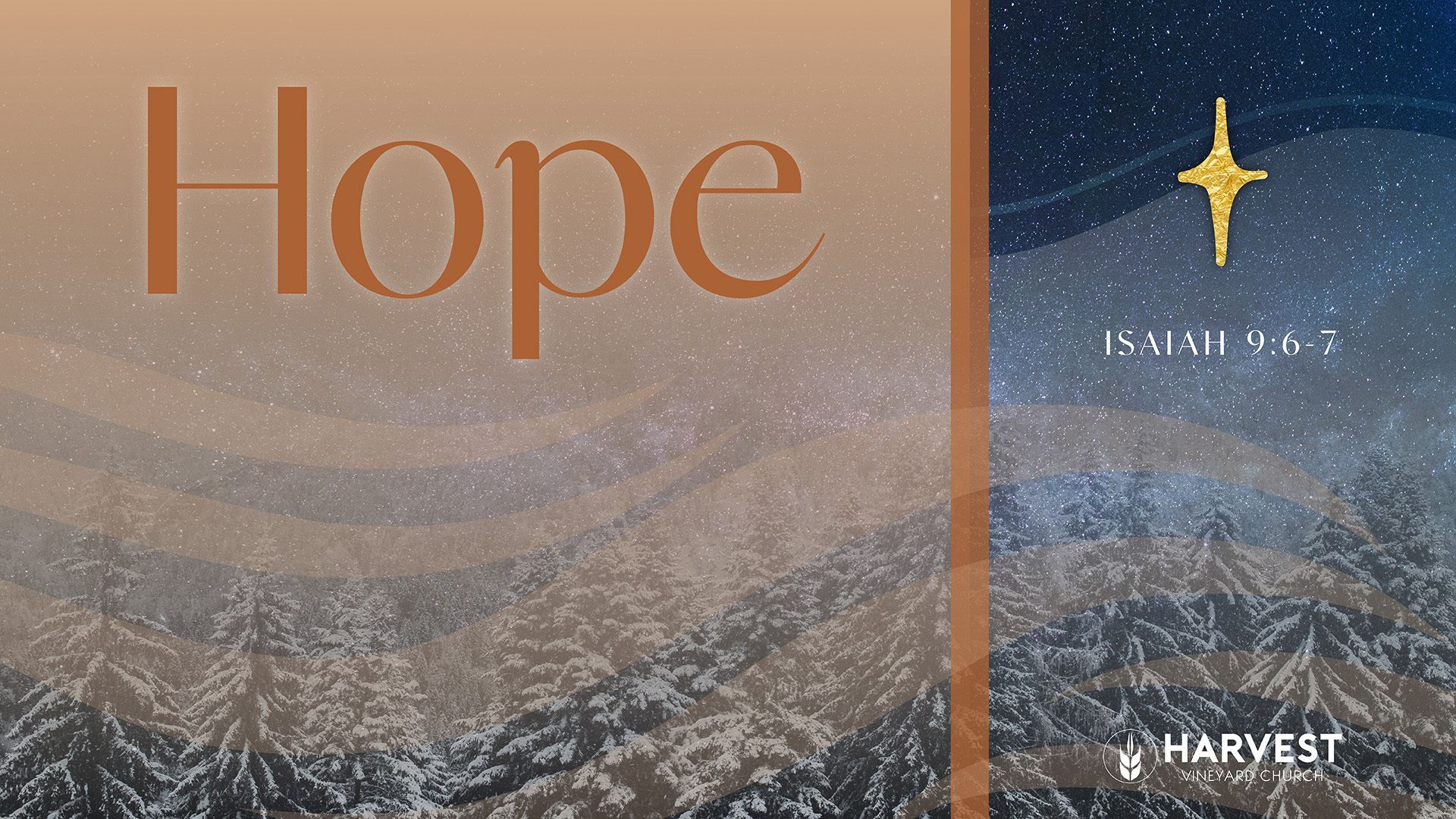

Finding Hope in the Darkness: An Advent Reflection
As winter's darkness settles around us and we enter the season of Advent, we find ourselves standing at a profound threshold. This four-week journey toward Christmas isn't merely a countdown to holiday celebrations—it's an invitation to wrestle with something deeply human: the collision between our hopes and our disappointments.
The Myth of Progress and the Reality of Disappointment
We live in a culture built on expectations. We expect life to improve continuously, moving ever upward and to the right like a promising stock market graph. We expect our businesses to succeed, our relationships to flourish, our nation to unite, and justice to prevail. Yet reality rarely cooperates with our expectations.
The disappointments accumulate: marriages that don't last, children who walk away from faith, friendships that never materialize, careers that stall, injustices that persist generation after generation. Sociologists suggest that disappointment has become the primary American emotion, stemming from what they call "the myth of progress."
There's a revealing formula that captures this reality: happiness = reality - expectations. When we expect life to be easy, life becomes unbearably hard. But when we expect life to be hard, it can actually become surprisingly good.
What If Disappointment Is a Gift?
Here's a radical thought: what if disappointment isn't our enemy but our teacher? What if those feelings of being let down are actually emotional signals telling us that our hope is attached to the wrong object?
Hope, after all, must have an object. It cannot float freely in abstract space. We place our hope in politics, in human progress, in institutions, in relationships, in our own abilities—and when these things inevitably fall short, we feel the sting of disappointment.
Even those who place their hope in God aren't immune. Think of those two disciples walking the road to Emmaus after Jesus' crucifixion, unknowingly talking to the risen Christ himself about their dashed hopes: "We had hoped that he would be the one to redeem Israel." They felt let down by God's plan.
Many first-century Jews rejected Jesus for precisely this reason. He didn't rally an army. He didn't defeat Rome. He didn't campaign for lower taxes or lead a political revolution. Jesus came, Jesus died, and Rome remained in power. The disappointment was crushing.
A Light in the Darkness
Into this reality of disappointment and despair, the prophet Isaiah spoke a word hundreds of years before Jesus was born. Israel faced military threats, wicked leadership, and seemingly hopeless circumstances. The nation walked in darkness.
And Isaiah declared: "The people walking in darkness have seen a great light; on those living in the land of deep darkness a light has dawned."
But what was this light? What was this hope?
"For to us a child is born, to us a son is given, and the government will be on his shoulders. And he will be called Wonderful Counselor, Mighty God, Everlasting Father, Prince of Peace. Of the greatness of his government and peace there will be no end."
Imagine Israel's response. A baby? That's the solution to our immediate crisis? How disappointing.
Yet this prophecy reveals the nature of true hope—not the wishful thinking of "I hope it's sunny today" or the optimistic platitude that "things will get better," but something far more substantial: the expectation of coming good based on the person and promises of God.
Hope Is About the Present
True hope isn't escapism focused on a distant future. Hope is emotional energy drawn from the future but spent in the present. It's fuel for living now, in this in-between time, in what theologians call the "already and not yet" of God's kingdom.
The kingdom has already broken into our world through Jesus' first coming. And yet it is not yet fully realized—we still wait for his return. We live in the tension between these two realities, where hopes are both fulfilled and dashed, where light breaks into darkness but shadows remain.
Advent was intentionally placed during the darkest time of year in the northern hemisphere to remind us that Christ came into the darkness and still comes into our darkness today. Religious systems that ignore the dark side of life are fundamentally dishonest. In Advent, we don't pretend we're in darkness before Christ's birth while living in light now. Rather, we face our present darkness honestly, so we understand with utmost clarity that our great and only hope is in Jesus.
The Character of Our Hope
What makes Jesus the proper object of our hope? Isaiah gives us four characteristics:
Wonderful Counselor: We all need direction. We face dead-end relationships, dead-end coping mechanisms, dead-end philosophies of life. Jesus offers wisdom when life is confusing and we don't know what to do.
Mighty God: We need not just good advice but the strength to follow through. Where do we find the power to do what's right when we're in darkness? By being connected to the One who declared, "In this world you will have trouble. But take heart! I have overcome the world."
Everlasting Father: Jesus embodies covenant faithfulness. He keeps his promises. He stays with us. He doesn't abandon us in times of trouble. His love outlasts our instabilities. As Psalm 103 says, "As a father has compassion on his children, so the Lord has compassion on those who fear him."
Prince of Peace: Jesus doesn't just address symptoms; he deals with the root problem of sin that causes our lack of peace with God and each other. He makes peace by dying for our sin and removing our offense from God's sight.
The Kingdom Is Advancing
Here's the stunning truth we must hold onto: "Of the greatness of his government and peace there will be no end."
The kingdom is not shrinking—it's advancing. Right now, across the world, people are hearing the gospel in new places and languages. People are being set free from addictions and oppression. Orphans are being placed in families. The destitute are being clothed. The hungry are being fed.
Even when we can't see it or feel it, the arc of history bends toward Jesus' reign. As Dr. Martin Luther King Jr. said, "The arc of the moral universe is long, but it bends towards justice."
Practicing Hope This Advent
How do we practice hope during this season? Two simple ways:
Live with kingdom expectation: Ask throughout your day, "Holy Spirit, where are you already at work?" When you walk into a room, a meeting, a store, expect that God is moving and look for ways to join him—through kindness, prayer, encouragement, or simply seeing people.
Engage in small acts of kingdom justice and mercy: Every act of generosity, forgiveness, healing prayer, or compassion is a sign of the coming kingdom. Volunteer, help a neighbor, listen to someone in trauma, invite someone to church.
As we enter this Advent season, may we find that our disappointments are invitations to redirect our hope to the only One who will never ultimately fail us. The King has come. The King is with us. And the King will come again.
Hit play to listen to the sermon this blog is based on
At Harvest Vineyard, we believe we are better together, in community. We're glad you're here.

ENCOUNTER CHRIST.
EXPERIENCE COMMUNITY.
LOVE THE WORLD.
We believe that experiencing the love and mercy of God is more effective in bringing change to people's lives than rules, guilt, and condemnation. We have attempted to make our community a place where people can come as they are and still experience love and mercy. At the same time, we desire to learn and apply the truth of God to our lives and learn how to speak truth to one another.